
CETECE, a technology center affiliated with NODDO, developed CERESENIOR to create functional foods for older adults, tailored to their nutritional needs and preferences.
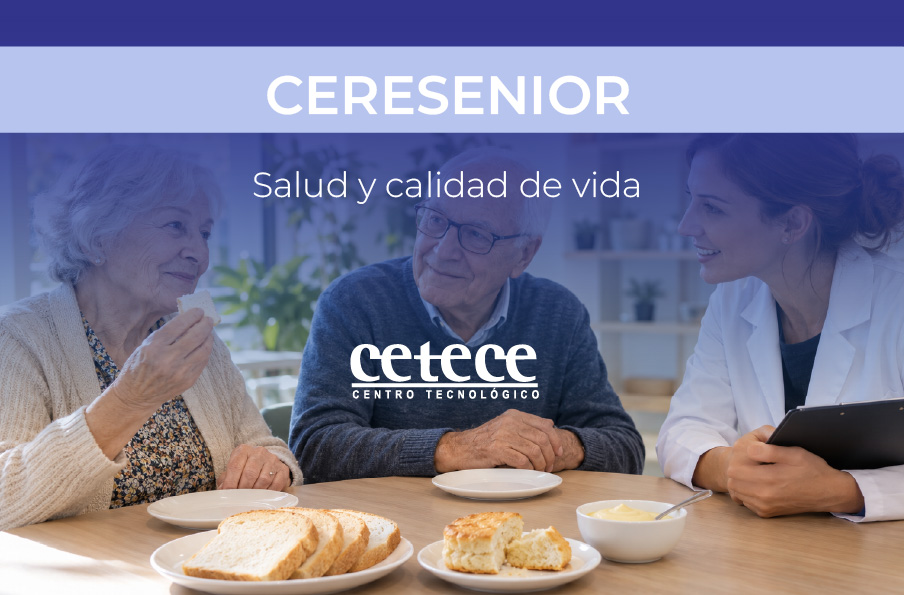
The progressive aging of the population poses new challenges for health, well-being, and quality of life. As people age, specific nutritional needs arise, along with difficulties related to chewing and swallowing and increased susceptibility to certain chronic diseases and inflammatory processes.
In this context, diet becomes a key tool for helping to maintain cognitive, immune, and digestive health.
With this challenge as a starting point, CETECE, a technology center affiliated with NODDO, developed CERESENIOR, a project aimed at creating innovative functional foods made from grains, specifically formulated to suit the tastes, habits, and needs of the senior population.
The initiative combined science, food technology, and consumer insights to move toward a healthier, more accessible diet tailored to an increasingly long-living society.
Surveying More Than 1,500 Older Adults to Identify Real Needs
One of the distinguishing features of CERESENIOR was that it drew on direct insights from the very people for whom the new foods were intended.
CETECE conducted surveys of more than 1,500 older adults to analyze their eating habits, preferences, nutritional needs, and main difficulties related to eating.
The study helped identify issues such as problems with chewing, swallowing, or digestion, as well as determine which products were most popular among this demographic.
This information was used to establish the nutritional, immunological, and cognitive requirements that should guide the development of new foods and to incorporate consumers’ actual needs into the research process.
Food Technology Applied to Healthy Aging
CERESENIOR incorporated various biotechnological and physicochemical technologies to develop foods with natural functionality and a tailored nutritional profile.
The goal was to create products capable of improving digestibility, providing beneficial nutrients, and promoting gut health, while maintaining desirable characteristics in terms of flavor, texture, and consumer acceptance.
The technologies used also made it possible to preserve sensitive compounds—such as B vitamins, vitamin K, and essential minerals—during processing.
The project thus brought together CETECE’s expertise in formulation, cereal technology, extrusion, thermal processing, preservation, nutritional characterization, and sensory analysis, demonstrating how applied research could be translated into new products for everyday consumption.
Three functional foods developed for the elderly
Based on the research conducted, CETECE worked on three common foods in the diet—sliced bread, soft cookies, and custard—to improve their nutritional profile, adapt their texture, and maintain high consumer acceptance.
Functional sliced bread
The bread developed incorporated plant-based ingredients that had undergone treatments designed to improve their digestibility.
It was high in protein, fiber, and phosphorus and served as a natural source of magnesium, potassium, and zinc. Its soft texture also made it easier to chew and swallow.
Enriched Soft Cookie
Using extrusion techniques, CETECE formulated a soft cracker enriched with B vitamins and vitamin K.
One of the main technological challenges was to preserve these nutrients during processing while also achieving a texture that was suitable and appealing to older consumers.
Custard with an adapted texture
The third product was a smooth, homogeneous, and easy-to-eat dairy dessert, made using pregelatinized starches and specific gums.
The custard was high in protein, calcium, and vitamins D, B6, B12, and folic acid, and was also a source of phosphorus.
Three different product developments that shared the same approach: combining nutritional value, functionality, ease of consumption, and sensory acceptance.
The innovation was validated with the senior population itself
CERESENIOR did not limit itself to the technological development of new foods. The products were evaluated through sensory acceptance tests with the target population.
Taste, texture, color, and overall acceptability were part of these evaluations, which received very positive ratings.
The results showed that it was possible to design functional foods tailored to specific nutritional needs without sacrificing the familiarity and enjoyment associated with eating.
User participation also made it possible to adjust the formulations, refine the textures, and verify that the developments met real needs before moving forward with future applications.
CETECE transformed knowledge into solutions for healthy aging
CERESENIOR demonstrated how food technology could help address one of the major demographic and social challenges of the coming decades.
By combining nutritional research, advanced formulation, processing technologies, sensory analysis, and user validation, CETECE developed solutions aimed at creating a more inclusive, preventive, and personalized diet.
The project demonstrated the Technology Center’s ability to apply specialized knowledge to new foods and processes with potential for application in the agri-food industry and with an impact on people’s health and well-being.
CERESENIOR was launched by CETECE and co-funded by the Institute for Business Competitiveness of Castile and León (ICECyL), the Regional Government of Castile and León, and the European Union through the ERDF.
A featured project in Health and Quality of Life by NODDO
CERESENIOR is also an example of the capabilities that the technology centers associated with NODDO apply to challenges related to health and quality of life.
In this project, innovation began with food as a way to address the needs arising from aging and to move toward healthier, more accessible, and better-adapted products.
From NODDO, the association of Technology Centers in Castile and León, we connect the knowledge and capabilities of our member centers with the needs of companies and organizations to facilitate the development of new technological solutions.
Projects such as CERESENIOR demonstrate how applied research can lead to concrete developments and how the specialized capabilities of technology centers can help address business and social challenges.
If your company or organization works in the fields of food, nutrition, functional foods, healthy aging, or the development of new food products and would like to explore new technological solutions, contact NODDO, and we’ll help you match your challenge with the most suitable capabilities.
Follow us on LinkedIn and subscribe to our newsletter to learn about new projects, capabilities, and solutions from the technology centers associated with NODDO.