
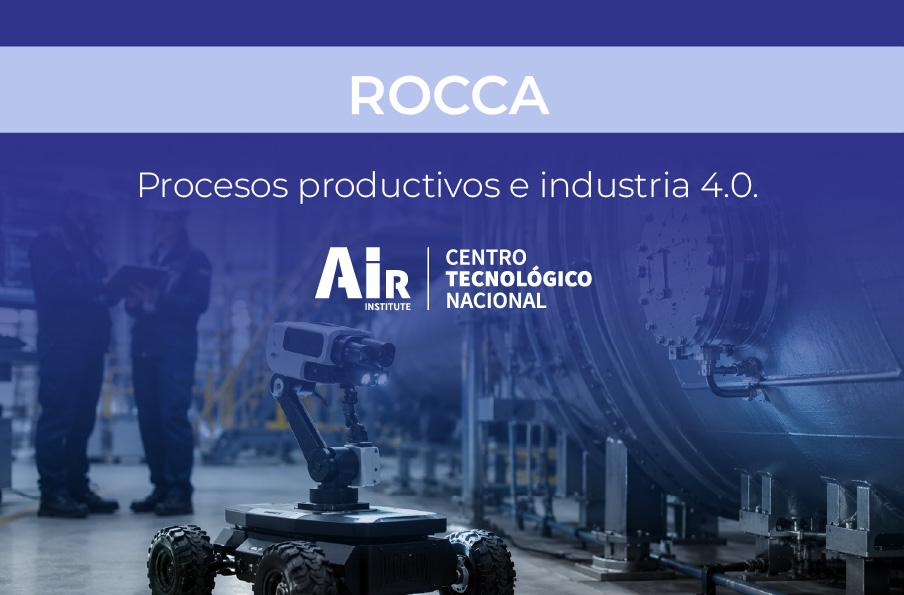
The project develops technologies for the inspection, smart maintenance, and protection of complex industrial infrastructures and environments.
Artificial intelligence, advanced robotics, and cybersecurity are playing an increasingly important role in strategic areas such as the protection of critical infrastructure, the management of complex industrial environments, and operational autonomy.
The ROCCA project—Operational Robotics for Quality Control, Inspection, and Assisted Maintenance in Defense—addresses these challenges by developing advanced digital technologies geared toward Industry 5.0 and specifically applied to the fields of security and defense.
The initiative brings together seven Spanish technology centers and allocates nearly six million euros to research and development activities for the 2026–2029 period.
AIR Institute, a technology center affiliated with NODDO, is participating in the project by contributing its expertise in autonomous artificial intelligence, multi-agent systems, post-quantum cybersecurity, predictive maintenance, and explainable computer vision.
A Cervera initiative with nationwide reach
ROCCA is being carried out under the Cervera Grant Program, which is promoted through CDTI Innovation to strengthen technological capabilities and collaboration among Spanish technology centers in areas with significant industrial and social impact.
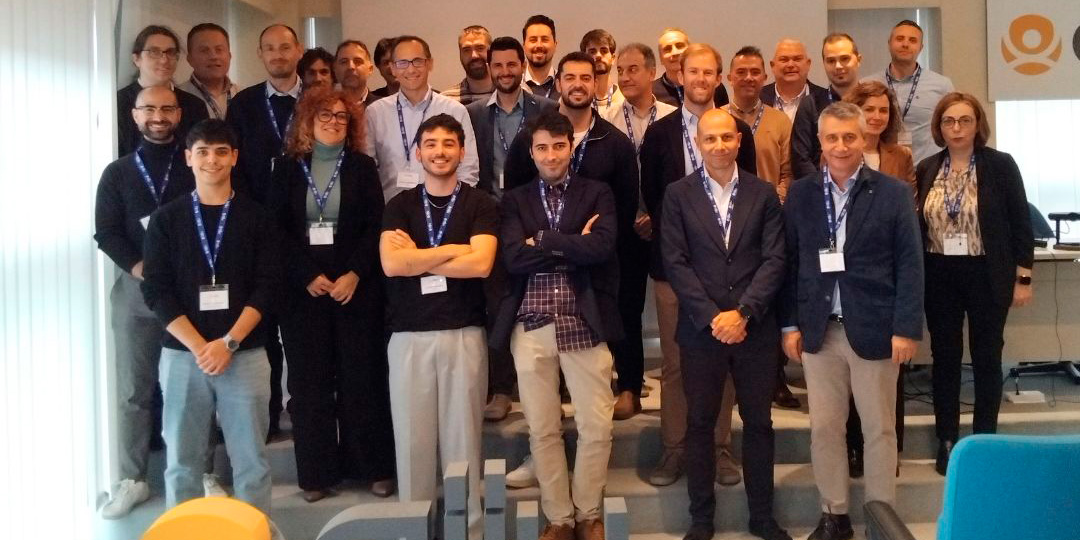
The project is coordinated by AIJU and involves the participation of AIN, AITIIP, CETEM, INESCOP, the AIR Institute, and VICOMTECH.
The collaboration among the seven technology centers will allow them to combine complementary knowledge and capabilities to advance the development of solutions related to robotics, inspection, smart maintenance, augmented reality, and trustworthy artificial intelligence.
The project is part of the field of digital technologies associated with Industry 5.0 and focuses on new challenges related to security and defense.
Its areas of interest include the protection of critical infrastructure, the management of complex industrial environments, and the enhancement of operational autonomy in sectors such as energy, advanced manufacturing, aerospace, and defense.
Autonomous Artificial Intelligence for Dynamic Environments
Within the consortium, the AIR Institute contributes its expertise in intelligent autonomous systems applied to dynamic and demanding environments.
One of its main areas of research focuses on agentic artificial intelligence ( Agentic AI ) and multi-agent deep reinforcement learning, known as MA-DRL.
These technologies enable the development of decentralized architectures composed of autonomous agents capable of operating in changing environments. The systems integrate reactive planning and reinforcement learning capabilities to coordinate collaborative operations.
The technology center’s work is therefore focused on developing systems that can operate autonomously, adapt to environmental conditions, and collaborate with other agents within the same operation.
Communication and Interoperability Between Systems
Another technological challenge addressed by the AIR Institute is autonomous communication between agents.
The center will work on systems based on imitation learning and large language models (LLMs) with the goal of creating interoperability protocols between heterogeneous platforms.
This line of research will advance communication among different agents, devices, and technology platforms, facilitating their coordination within complex operations.
Interoperability is particularly important in projects that require the integration of autonomous systems, inspection tools, robotic platforms, and digital technologies developed by different organizations.
Advanced Cybersecurity and Post-Quantum Resilience
The protection of communications and information is another key focus of the AIR Institute ‘s involvement in ROCCA.
The technology center contributes its expertise in the design of intelligent defenses based on post-quantum encryption and in intrusion detection systems using artificial intelligence.
Post-quantum cryptography aims to develop security mechanisms capable of withstanding the capabilities that quantum computing systems may achieve in the future.
Its application is particularly relevant in security and defense environments, where information confidentiality, communication integrity, and resilience against digital threats are essential factors.
Predictive and Prescriptive Maintenance with Explainable AI
AIR Institute is also involved in the development of predictive and prescriptive maintenance technologies based on explainable artificial intelligence.
Predictive maintenance allows for the use of data and artificial intelligence models to anticipate potential failures in autonomous systems.
Prescriptive maintenance, on the other hand, aims to optimize the actions that must be taken in response to detected or anticipated incidents.
The incorporation of explainable artificial intelligence, known as XAI, will make it possible to interpret and analyze the results of these systems. As a result, the predictions and recommendations generated will have higher levels of traceability and interpretability.
This approach is particularly important in highly demanding environments, where it is necessary to understand the criteria a system uses to issue an alert, anticipate a failure, or recommend a course of action.
Explainable Computer Vision for Inspection and Quality Control
Computer vision is another capability that the AIR Institute brings to the project.
The center will work on lightweight hybrid architectures that combine convolutional neural networks (CNNs) and transformer models.
These architectures will incorporate interpretable monitoring mechanisms for inspection and quality control tasks.
The goal is to develop efficient and explainable computer vision systems capable of analyzing visual information and facilitating the interpretation of the results obtained.
This combination of efficiency and explainability is particularly important in inspection processes, where it is not only important to detect a potential anomaly, but also to understand the factors that influenced the system’s decision.
Previous experience in artificial intelligence and cybersecurity projects
The AIR Institute ‘s participation in ROCCA is based on the experience the technology center has gained through regional, national, and European projects.
Among them are NOUS and dAIEDGE, developed under the Horizon Europe program; QUANTUMSHIELD, focused on post-quantum cybersecurity applied to the industrial sector; DIGIS3, the European Digital Innovation Hub of Castile and León coordinated by the AIR Institute; and CIBERIA, focused on digitalization and cross-border resilience.
These projects have enabled the center to make progress in areas such as distributed artificial intelligence, edge computing, post-quantum cybersecurity, and digital resilience.
The experience gained through these initiatives is now being applied at ROCCA to help develop solutions for one of the most demanding technological fields: security and defense.
A center specializing in reliable artificial intelligence
AIR Institute is a private, nonprofit technology center based in Carbajosa de la Sagrada, Salamanca.
It also has research centers at the University of Valladolid Science Park, the Internet of Things and Artificial Intelligence Center in Salamanca, and the Center for Specialization in Intelligent Data Spaces in Zamora.
The center has more than 100 professionals organized into groups specializing in explainable and reliable artificial intelligence, deep learning, edge computing, cybersecurity, post-quantum cryptography, the Internet of Things, natural language processing, and quantum computing.
Since its founding in 2018, it has participated in more than ninety research and development projects at the regional, national, and European levels.
It is also active on international platforms such as GAIA-X, the 6G Industry Association, and IoTDIH, and collaborates with the DemIA Chair in Trustworthy Artificial Intelligence at the University of Salamanca.
Technological capabilities applied to a strategic area
The AIR Institute’s participation in ROCCA will enable it to apply its expertise in autonomous artificial intelligence, multi-agent systems, computer vision, and cybersecurity to the specific challenges of security and defense.
“ROCCA represents a unique opportunity to apply our capabilities in autonomous artificial intelligence and cybersecurity to one of the most demanding fields: security and defense. The combination of the consortium’s seven centers allows us to tackle highly complex technological challenges with a comprehensive approach, ranging from robotics and inspection to trustworthy AI and resilience against digital threats,” explains Albano Carrera, lead researcher of the electronic innovations team at the AIR Institute.
The collaboration among the seven technology centers will make it possible to approach the project from different fields of expertise and make progress in developing comprehensive solutions related to robotics, inspection, trustworthy artificial intelligence, and protection against digital threats.
As a technology center affiliated with NODDO, the AIR Institute brings to this national initiative specialized capabilities developed in Castile and León and a proven track record in projects related to artificial intelligence, digitalization, and cybersecurity.
ROCCA thus represents a new step in the application of advanced digital technologies to strategic areas, with the goal of developing systems that are more autonomous, reliable, interpretable, and resilient.