

The Miranda de Ebro Technology Center is introducing new testing methods to evaluate shot peening media, a key treatment for improving the strength and reliability of industrial components.
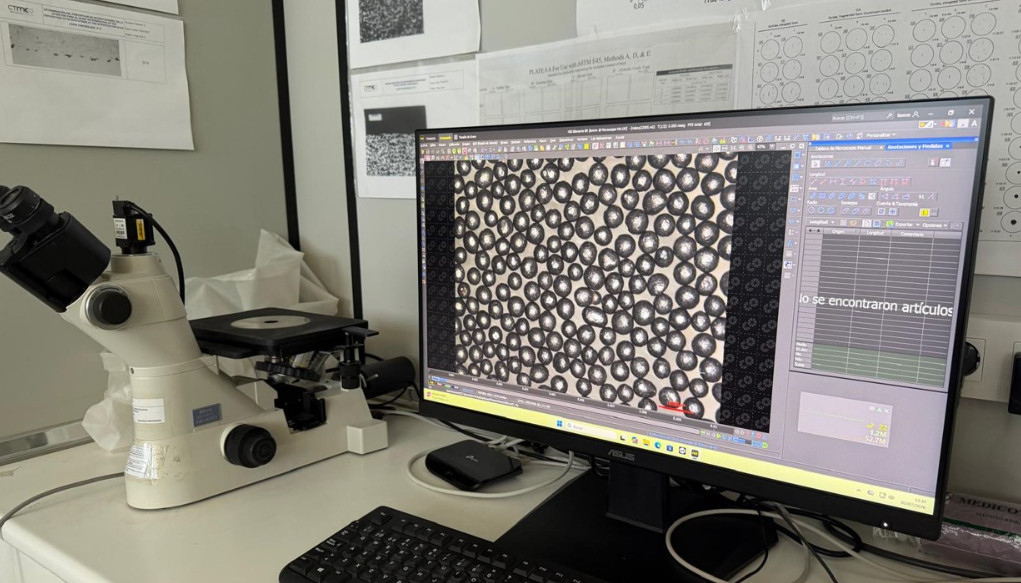
The Miranda de Ebro Technology Center (CTME) has added new capabilities to its Materials Testing Laboratory with the aim of strengthening quality control in highly demanding industrial processes. These new tests are designed to characterize and verify the shot used in shot peening processes, in accordance with the requirements of the AMS 2431/1 specification.
Shot peening is a surface treatment used on metal components to improve their fatigue resistance, increase their reliability, and extend their service life. Although it is applied to the surface of the parts, its impact is decisive in sectors where materials are subjected to stress, repeated loads, or demanding operating conditions.
In this process, the shot used as the blasting medium plays a crucial role. Its quality, size, geometry, hardness, and level of contamination can directly influence the intensity of the treatment, the coverage achieved, and the repeatability of the process. Therefore, verifying the characteristics of the media used beforehand is essential to ensure consistent and reliable results.
With this new capability, CTME’s materials laboratory is expanding its portfolio of services with a set of tests designed to verify that the pellets meet the requirements of the relevant technical specification. These include microhardness testing, density testing, contamination level assessment, analysis of shot geometry, inspection for internal defects, and verification of size and particle size distribution.
These analyses make it possible to assess the compliance of the shot blasting media before its industrial use and help reduce process variability. As a result, companies can exercise greater control over the quality of the surface treatment and the final performance of the treated components.
The addition of these new tests reinforces CTME’s technological expertise in the field of materials and surface treatments. This capability is particularly relevant for sectors such as the aerospace, automotive, and energy industries, as well as advanced manufacturing and other fields where fatigue resistance, safety, and component durability are critical factors.
According to NODDO, the association of Technology Centers in Castile and León, this new capability highlights the role of Technology Centers as technical partners to industry. Through specialized laboratories, applied knowledge, and advanced testing and characterization services, the centers help companies innovate, improve their processes, and meet increasingly demanding standards.
The expansion of CTME’s materials laboratory capabilities is an example of how innovation is also built on the control, verification, and continuous improvement of industrial processes. Better testing enables safer manufacturing, reduces uncertainties, and paves the way for more reliable, competitive products that are ready for demanding environments.